Property law
Airbnb in Mallorca: How a 1962 Bylaw Can Shut Down Your Holiday Rental
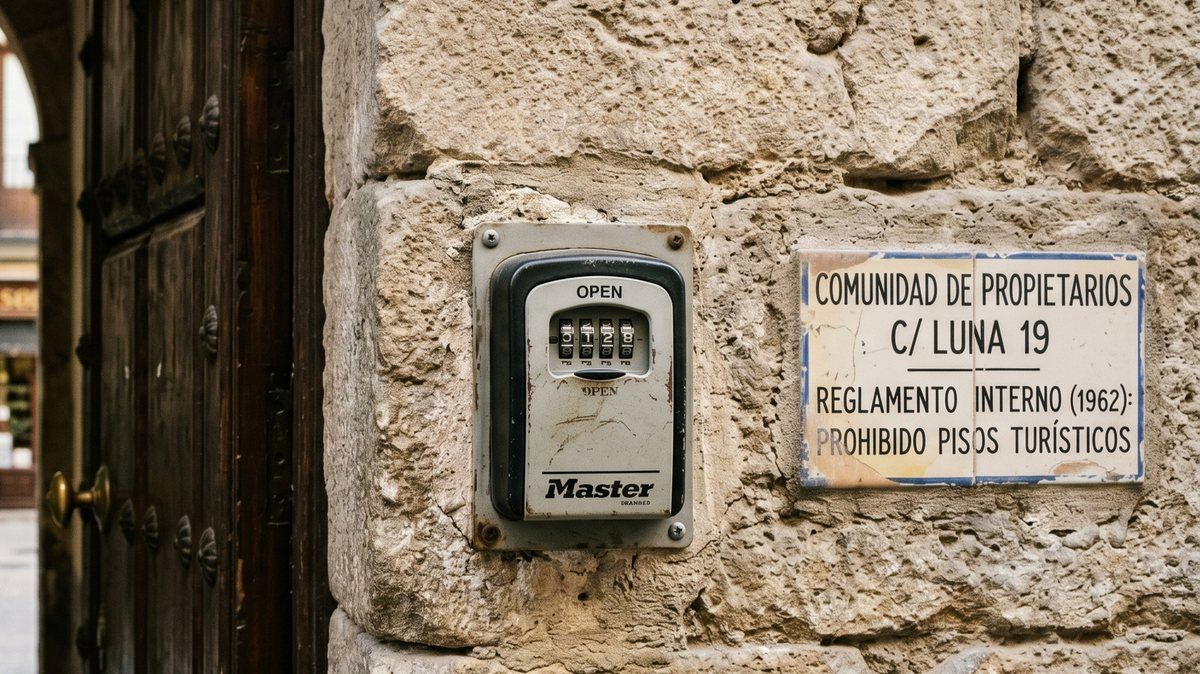
Having a valid ETV tourist licence in Mallorca is no longer enough to guarantee that you can legally operate a short-term rental. Spain's Supreme Court has confirmed that a single word written in a building's original statutes — drafted decades before Airbnb existed — can be sufficient to order the permanent closure of a holiday rental, with no compensation and full legal costs against the owner.
If you own or are planning to buy a property in Mallorca as a rental investment, this ruling changes your legal risk assessment.
What the Supreme Court Decided
The case concerned an apartment in central Madrid listed at €113 per night. The owner held a valid regional tourist licence, operated through established platforms, and argued that the building's 1962 statutes could not possibly ban something that did not exist in 1962.
The lower courts agreed. The Supreme Court did not.
The Court focused on one word in the original bylaws: hospedería — a term the Royal Spanish Academy defines as "a house intended for the lodging of visitors or travellers, established by private individuals or companies." The Tribunal ruled that a short-term Airbnb operation fits that definition precisely, and that the 1962 prohibition therefore applies to it in full.
The consequences for the owner were severe: permanent closure of the rental activity, plus full payment of legal costs accumulated over years of litigation.
Why This Matters Specifically in Mallorca
Mallorca's property market has a high concentration of older buildings — particularly in Palma's historic centre, the Eixample, and established coastal areas — whose original community statutes were drafted in the 1950s, 1960s, and 1970s. Many of those statutes contain prohibitions against hospederías, pensiones, fondas, or similar lodging uses that were standard boilerplate at the time.
The Balearic Islands already operate under a moratorium on new ETV tourist licences since 2022, extended indefinitely in 2024. In Palma, the City Council amended its General Plan in February 2026 to permanently close the door on new short-term tourist letting. This means the only route to a legal tourist rental in Mallorca is buying a property that already holds a transferable ETV licence.
After this Supreme Court ruling, that check is no longer sufficient on its own. Even a valid, transferable ETV cannot override a community bylaw that prohibits lodging use.
The Legal Framework: Two Different Sets of Rules
To understand why a tourist licence cannot override a community bylaw, it helps to know that short-term tourist rentals in Spain sit at the intersection of two distinct legal regimes that do not communicate with each other.
The regional tourist licence — the ETV in the Balearic Islands — is issued under regional tourism law (Ley 8/2012 del Turismo de las Illes Balears). It authorises the activity from a public-law perspective: you are allowed to operate as a tourist rental under Balearic regulations.
Community bylaws, however, are a private-law matter governed by the Ley de Propiedad Horizontal (LPH). The Supreme Court's ruling confirms that a private contractual restriction between co-owners — even one written sixty years ago — is not displaced by a public administrative licence. The two systems are independent. Holding one does not protect you from the other.
Under art. 17.12 LPH, a community of owners can vote by three-fifths majority to ban new tourist rentals going forward. After this ruling, that vote is not even necessary if the original bylaws already contain a lodging prohibition. The ban is already active — and retroactive.
What a Proper Pre-Purchase Check Must Cover in 2026
For any Mallorca property being acquired as a short-term rental investment, the due diligence checklist must now include:
| Check | Where to verify | Risk if skipped |
|---|---|---|
| ETV licence validity and transferability | Balearic tourism registry (ATURISME) | Buying a property that cannot legally rent short-term |
| Original community statutes (full text) | Property Registry (Registro de la Propiedad) | Hidden lodging prohibition enforceable despite ETV |
| Any subsequent community agreements on tourist use | Community administrator's records | More recent three-fifths vote banning rentals |
| Urban planning classification of the property | Ajuntament informe urbanístic | Residential-only zoning incompatible with tourist use |
| Outstanding community fees or charges | Community administrator's certificate | Buyer inherits unpaid debt under art. 9.1(e) LPH |
The statutory review — obtaining and analysing the original building statutes from the Property Registry — is the step that standard conveyancing in Spain does not routinely include, and the one this ruling makes non-negotiable.
Frequently Asked Questions
Can a valid ETV tourist licence protect me from a community bylaw closure?
No. The Supreme Court's April 2026 ruling confirmed that a regional tourist licence and a community bylaw operate under separate legal systems. The ETV authorises your activity under public tourism law, but it does not override a private contractual restriction between co-owners. If your building's statutes prohibit lodging use, a community of owners can take you to court and obtain a closure order regardless of whether your ETV is in order.
How do I find out if my building has a lodging prohibition in its statutes?
You need to obtain the original founding statutes of the community (título constitutivo) from the Property Registry (Registro de la Propiedad) where the building is registered. Estate agents and notaries do not routinely provide this document. In older buildings — particularly those constructed before 1975 — the statutes may contain terms like hospedería, pensión, fonda, or casa de huéspedes that are now enforceable against modern holiday rentals.
I already own a property with an ETV in Mallorca. Am I at risk?
Potentially yes, if your building was constructed before roughly 1975 and you have not reviewed the original community statutes. The risk is higher in Palma's historic centre and older residential buildings in established areas. The ruling gives neighbouring residents a stronger legal basis to challenge your rental activity. A precautionary review of your building's statutes is advisable before a complaint is filed — it is considerably cheaper to address the issue proactively.
Can the community of owners change the statutes to allow tourist rentals?
Yes, in principle — but it requires unanimous agreement of all co-owners to modify the founding statutes, which is significantly harder to obtain than the three-fifths majority needed to ban new tourist rentals under art. 17.12 LPH. In practice, in buildings where residents have already complained about tourist activity, unanimous agreement to remove a historic prohibition is unlikely.
Does this ruling apply to long-term rentals in Mallorca?
No. Long-term residential rentals of more than 30 days are governed by Spain's Urban Leasing Law (LAU 29/1994) and are treated as residential use, not commercial activity. The Supreme Court's ruling specifically concerns short-term tourist rentals, which the Court classifies as a commercial (terciario) use incompatible with bylaws that reserve buildings for permanent residential occupation.
What happens if I continue operating my Airbnb after a community closure order?
Continuing to operate after a judicial closure order constitutes contempt of court (desobediencia a resolución judicial), which carries its own separate legal consequences. The community of owners can also apply for enforcement of the order, request daily penalty payments, and seek compensation for damages caused. The financial exposure grows significantly once a court order is in place.
How I Can Help
If you own or are planning to buy a property in Mallorca as a short-term rental investment, I can review the building's original statutes, verify your ETV status, and give you a clear picture of your legal exposure before you commit.
I work with international buyers and property owners across Mallorca. Consultation in English.
Book a 30-minute consultation30-minute initial consultation: €200, VAT included.
You pay when you book, by card (Stripe), in the Cal.com calendar. You get an invoice. If I cannot take your matter, I refund the amount. How we use your data: privacy policy.
- STS 28 de abril de 2026 (Magistrado José Luis Seoane Spiegelberg) — Tribunal Supremo, Sala de lo Civil
- Ley 49/1960, de 21 de julio, sobre Propiedad Horizontal — texto consolidado, BOE
- Ley 8/2012, de 19 de julio, del Turismo de les Illes Balears — texto consolidado
- Plan General de Ordenación Urbana de Palma — modificación febrero 2026
- Real Academia Española — Diccionario de la lengua española, entrada "hospedería"
Last reviewed: May 2026